
Site last updated 10/5/2026
Disposition Of Model Railroad Resources
Model railroading is a wonderful hobby . . . many modelers have enjoyed scale trains since their youth. We often hear of enthusiasts who placed a curricular set of train tracks under a Christmas tree as a kid or learn about an original layout, built on a single 4’ x 8’ piece of plywood. Over the years and even decades, the collection of locomotives, rolling stock, structures, vehicles, electronics, supplies, and tools have grown to fill bedrooms, attics, basements, and out-buildings.
Unfortunately, there comes a time to liquidate all those resources. It might be moving on from the hobby, life changes that involve leaving a home or community (downsizing), or a modeler passing on. The mountain of equipment and supplies is worth something, to someone, but who? Information on this site should help in identifying the best process for you and your loved ones, as to the disposition of model railroad resources.
Overview:
Model railroad items are purchased at hobby shops, via online stores, from individual vendors and commercial dealers at train shows, and even from friends and strangers. One should add in all the resources that are acquired through personal gifts at a birthday and during the Holidays. All that said, the NMRA’s Central Indiana Division does not buy, sell, or trade model railroad items (other than an odd convention car, as a commemorative act).
The value of railroad resources varies widely. There are new retail and discounted retail prices, often shown on commercial websites or in catalogs. The value of second-hand and aging items are generally much lower. Scratch-built structures can be of excellent detail and of greater perceived value than of completed kits. Scale vehicles and detail parts are often expensive to purchase individually and may or may not lose their value over time. Naturally, the actual value depends on finding a person willing to pay the desired price.
The actual value of highly-detailed brass items fluctuate perhaps as much as any resources. Early in model railroading, extreme detail (at scale) could only be reproduced with metal, so those items were unique and expensive. Yet today, plastic and 3-D printed models are of superior quality, and when outfitted with DCC electronics on-board, are of greater value to modern modelers. Therefore, detailed brass models are often considered collector items while others are well done but are considered lower value. This includes familiar items from Lionel, American Flyer, and other older firms; some items are museum quality with significant value while thousands of similar items are available and therefore the value has decreased.
The value of most second-hand items will be half the retail price or much less. As an example, some HO freight cars with modern couplers and good trucks and wheels often sell for $5 at today’s train shows. Quite frankly, it is common to find these items at shows with a “make an offer” sign on the displays.
A note about train shows and pricing; remember that most vendors are in the business of model railroading, versus individuals or families who merely want to dispose of resources. Their pricing is designed to gain enough profit to enjoy a profit through model railroading. Participating in a show does require boxing (if available) items in original containers, pricing and displaying the items, traveling, renting table(s) to display items, and the reloading of items that did not sell. It is also good to remember that train shows provide a way to meet and talk with commercial dealers even without having tables to display personal items. A listing of some of your items and pictures will help start a discussion with dealers at a train show.
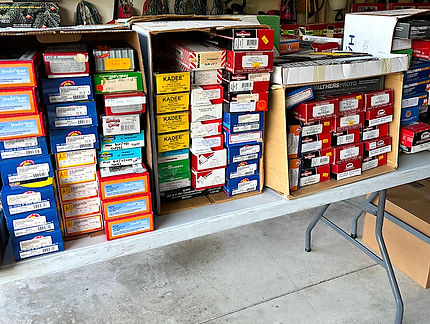
Some model railroaders have large collections of locomotives, cars, structures, electronics, tools, and other resources!

Model railroad layouts are seldom sold as a complete unit. They are often difficult to divide and remove from a house or building. That said, layouts built in sections or modules are easier to remove from a location. Some or many of the items on a layout can be removed and resold. Track is difficult to salvage without damaging it (especially if it has been glued down and ballast added). Buildings, bridges and other items may be salvaged for resale at moderate prices. Layout items that may have higher value include brass coaling towers, factory complexes, sanding towers, and certain scenic elements. These days, most layouts items of some value are removed and the benchwork, custom wiring, etc. are disposed in the trash.
It is important to recall that the model railroader that built a layout, purchased equipment, and assembled and positioned items found this to be a pleasurable activity for years. Some value from the sale of items is possible. It is also possible to donate items after finding an interested person or organization.
First and Next Steps:
A Microsoft Word document has been prepared with useful notes about the disposition process. To access the file, simply: CLICK HERE.
Keep Safety In Focus:
Safety is an important element of the removal process of any layout and related resources. Nails, screws, and other fasteners are a hazard when taking down benchwork. Many metal components have sat in boxes or on shelves for decades; catching a finger on a sharp edge or pointed feature might require a trip to get a tetanus shot.
Electrical wiring and electronics are common in many model railroads; be sure all power is cut-off at the source before dis-assembly or removal work starts. Signals, lights, vehicles, and other devices may have a battery back-up system so are charged even when electricity is cut-off . . . again, be careful around any model railroad. This warning applies to supplies as well, as many hobbyists have a large variety of paints, solvents, glues, and other chemicals for their modeling tasks. Handle all items with care!
Additional NMRA Information:
The National Model Railroad Association website has additional information about Estate Planning and disposition of a model railroad estate. https://www.nmra.org/estate-planning
List of dealers:
To facilitate possible contact between you and dealers and individuals we have prepared a list of contacts. CID officials have contacted the dealers and individuals that have displayed at one or more of the NMRA’s Central Indiana Division train shows. Those listed have each indicated they are willing to be contacted and might possibly purchase or assist you with disposition. A note, we do not have input about their business or practices, and have no way to monitor or supervise contacts and transactions.
And a friendly note; it is suggested you contact and discuss your options with at least two different sources.
CID / MWR / NMRA Members:
Officials and members of the Central Indiana Division truly enjoy the hobby of model railroading. You have the option to make contacts and gain information about our amazing hobby, specific resources, and trends in the hobby. But as noted above, the Central Indiana Division / NMRA does not buy and sell collections of model resources. Our non-profit status has strict parameters when it comes to commercial activities.
Problems:
If you have a problem, you may contact us again using the website: https://www.cidnmra.org/contact
Interested in model railroading:
The National Model Railroad Association is a good way to learn more about the hobby including the local Region and Division. People are encouraged to attend events to learn more and to consider membership.